
FG must negotiate with labour — NUPENG President
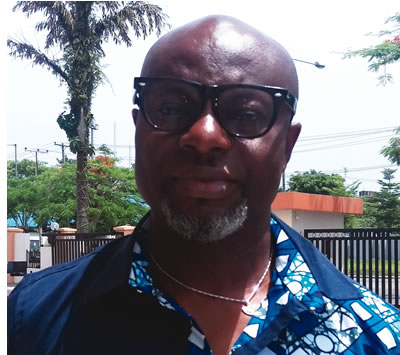
President of the National Union of
Petroleum and Natural Gas Workers, Dr. Igwe Achese, in this interview
with MUDIAGA AFFE, speaks on the recent fuel price hike
Was the
National Union of Petroleum and Natural Gas Workers part of the meeting
with the Federal Government and the Nigerian National Petroleum
Corporation to increase fuel price?
We were not part of the decision making
process but we were invited by the Vice-President, Prof. Yemi Osinbajo,
to attend a meeting without knowing the purpose why we were invited.
When we got to the venue, there was a presentation by the Ministry of
Petroleum and reactions. That was all. When we got there, we met the
leadership of the Nigeria Governors Forum, the leaderships of the Senate
and House of Representatives were also there. The Vice-President simply
told us that he invited us to listen to the presentation by the NNPC
and after that, arguments were made from the governors and
parliamentarians. The arguments from their end were more of warning the
Ministry of Petroleum to stop tampering with the excess crude oil funds
so that they could generate revenue and run their governments in the
various states. At the end, they gave us, the labour leaders who were
present, the opportunity to speak. In my response as the forum chairman
of NUPENG/PENGASSAN, I told them clearly that we had heard and that we
felt the pains of Nigerians and understood the challenges in the oil and
gas sector because they affected us too. We told them that we would
take the issues back to our organs. That was what happened at the
meeting. The leadership of the TUC and representative of a faction of
the Nigerian Labour Congress also said the same thing. We thereafter
left the meeting after exchanging pleasantries and a photo session only
to arrive in Calabar for the National Executive Council meeting on
Thursday and got the information that the price meeting had been done
and the new price of PMS had been agreed upon. However, for us at NUPENG
and PENGASSAN, we did not see it as a surprise. We also did not see it
as something that was new. It is an issue that we have been discussing
in the past eight years that the sector must be deregulated. We have
said that the market economy of the downstream sector must be open and
that government should stop paying subsidies to a few individuals. The
things we mentioned as palliatives that should be done are to make the
refineries work and also secure the pipelines.
Will you say the Federal Government and the NNPC are sincere or reasonable with the new price regime?
I will not want to talk about pricing
because it is a regulatory issue. You can sit down one day and chose to
regulate the price if it is on the high side. But as it is, compared to
the international environment, I think we are the lowest paying country
in terms of the PMS pricing. But let us not look at that as the basis
for this issue. That is why we do not want to say whether the price is
fair or not. For us in NUPENG and PENGASSAN, the basic thing here now is
that the market is now deregulated. A few Nigerians cannot be taking
trillions of naira meant for the nation. We have to return this nation
into a viable economy. This is where we have based our argument. For us,
within this short period of subsidy payment, the negligence and
abandonment of the refineries had caused a lot of Nigerians to lose
their jobs in the oil and gas sector.
For us, it is full deregulation that we
have been yearning for and we are now saying that the revenue that will
accrue must go back to create the expected impact in the oil and gas
sector and other key aspects of the nation’s economy.
It is a common knowledge
that when this kind of new price regime is pronounced, it does not come
down to its original price. Will your union agitate for return to its
original price if there are protests over the matter?
I do not think that Nigerians would want
to go and protest on the road. I want to state something clearly, in
2012, I was the National Trustee of the NLC and we knew what really
played out. Even when the labour force was on strike, NUPENG and
PENGASSAN were not on strike but we were there watching out on issues
and dialoguing with the people. Filling stations were open at that time
in order not to create huge sufferings for Nigerians and I kept asking
myself why would Nigerians keep lying to Nigerians? What has brought us
to where we are is because government after government, politicians
after politicians, keep lying to the masses. Unfortunately, the poor
masses do not want to know the truth; all they believe is that they want
to see the product. You will agree with me that during the period of
the recent issue of scarcity, people bought the product for as high as
N500 per litre. You can imagine the pains. For us as a union, we did
make a promise that we would continue to haulage petroleum products to
the nooks and crannies of Nigeria provided the products were available
for us to haulage. We were able to sustain that. For those who felt
products were not available, we took products to filling stations even
though it was expensive. But here we are, our borders are porous; our
Customs are not doing what they are supposed to do in securing the
borders. The Immigration authority needs to be restructured. Otherwise
we cannot be here hearing that from Sokoto to Adamawa people are moving
hundreds of trucks loaded with products to Chad. What happens to our
borders? And then because the product prices are higher there, everybody
is smuggling it out to where they will make three times the profit.
When these products go to the northern part of the country, hundreds of
trucks are diverted and then you now begin to hear that the North has no
petroleum product. We must help ourselves. The state governors must
wake up from their slumber by securing their borders as the chief
security officers of the states because it is their responsibility. For
me, we expect to see that governors are working very hard to close their
borders. Unfortunately, the security agencies know what is happening.
Trucks are not invisible items; they are so visible that you see them
moving past you. We cannot say the Police, Department of State Services,
Joint Task Forces, National Security and Civil Defence Corps and
Customs, among other agencies are not aware of these movements. But the
challenge is, who will take the right decision to move the nation
forward? But I think we are on track right now.
How do you think this will affect the standard and quality of lives of the people in terms of cost of living?
Definitely the cost of living is going
to be high. It is going to be like the period when the Global System for
Mobile Communication was introduced, the call tariffs were high and
Nigerians were afraid that they could not afford it, but after a period
when competition entered the market, the tariffs dropped and the people
started understanding that if A could drop its price, B too should be
able to. Thus, we are trying to open up this market which we yearned for
in a long while. We are of the view that the NNPC should also compete
in the global environment as a world-class organisation. As a
world-class organisation you cannot begin to put price tag on products –
let the environment determine the price. But the take off point is
very key and fundamental. At a point we would now begin to consider what
is reasonable and what is not reasonable in terms of pricing.
Some people still feel that
the oil industry is bedevilled by the cabal that the last administration
complained of. Is there really a cabal?
Of course there is a cabal. I want to
say that the oil sector in Nigeria has an institution that works like a
chain or cycle of people who do the business and it is interwoven. But
with the current unbundling of the sector, you will now discover that
the market will be open. The issue of lobbying to get product allocation
from NNPC will not be there again. The issue of entering into agreement
for the use of facilities will not arise again. Everybody will now want
to be a player and the NNPC, for instance, will now select where to
take its products to. It is going to be a competitive environment. But I
have said that what labour must begin to focus on is to talk about the
issues of a living minimum wage which we have proposed to the Federal
Government that the least worker in the country should be paid N90,000.
We are not unmindful of the fact that a faction of the NLC has proposed
N56,000. Thus, you will begin to see why we used the range of N90,000.
At the current range of petroleum product pricing, N56,000 cannot
sustain a worker. Let us begin to look at N90,000 and see where we get
to. Our position is that government should quickly call labour
organisations for negotiations. These are part of the palliatives that
can also move us in line with the change that the President Muhammadu
Buhari-led administration is talking of.
Do you think the
government is doing enough to address this issue of militants that are
destroying pipelines and crude oil installations?
The government is not doing enough I
must be frank to you. We came up with an idea in 2003 when these
militants were destroying facilities across the Niger-Delta region
during the government of ex-President Olusegun Obasanjo. We did a
proposal to the then president that he should apply truce to see if we
could curtail the matter, but he disagreed. He called them and allegedly
gave them money and told them to stay off the creeks, but the boys went
back and started bombing again. But when Obasanjo left, late President
Umaru Yar’Adua came and revisited the proposals and he developed the
same proposal we presented to Obasanjo and at the end of the day he
(Yar’Adua) bought the idea and applied it. That was how truce came
through the amnesty programme. Today, the amnesty programme is being
withdrawn and most of these young men are not being paid and a lot of
vandalism is taking place in the creeks and waterways. But the simple
question you will ask is whether these people are invisible or not. Is a
vessel that will carry 15, 000 metric tons of stolen crude oil
invisible? The answer is no. For me, government is not doing the
needful in order to secure our facilities as expected. They need to do
more to secure these facilities otherwise we will continue to have this
challenges of sustainability of our oil and gas environment. Like you
heard of the illegal bunkering going on in the creeks and I suggested to
the Minister of State for Petroleum that we should think of getting
those guys who are locally refining to know how they are developing
their technologies. Instead of stealing the crude oil to refine, we
should think of gathering them somewhere and borrowing the technology
and developing it. By so doing, you have created jobs for this set of
persons. The reason these people are carrying out the destructive
actions is largely as a result of unemployment. These people are also
afraid that the environment itself is not secured for them, but if you
create a secure environment they will accept. I must say that the
government must approach this issue with all the best diplomacy to
resolve them instead of killing Nigerians like animals.
What is the way forward?
The government should quickly move into
action by inviting Labour for discussions on the minimum wage. The
current minimum wage of N18, 000 cannot sustain this price increase.
Again, the government should make sure that the resources accruable as a
result of the removal of subsidy are ploughed back into the nation’s
economy. They should also put in place infrastructure that will create
jobs to get the economy back on track.


No comments:
Post a Comment